Skip to content
Warehouse Robotics | Autonomous Mobile Robots (AMR) | Goods-to-Person | Regional Breakdown | April 2026 | Source: WGR
| $62.7B | 23.8% | $10.9B |
|---|---|---|
| Market Value by 2032 | CAGR (2024-2032) | Market Value in 2024 |
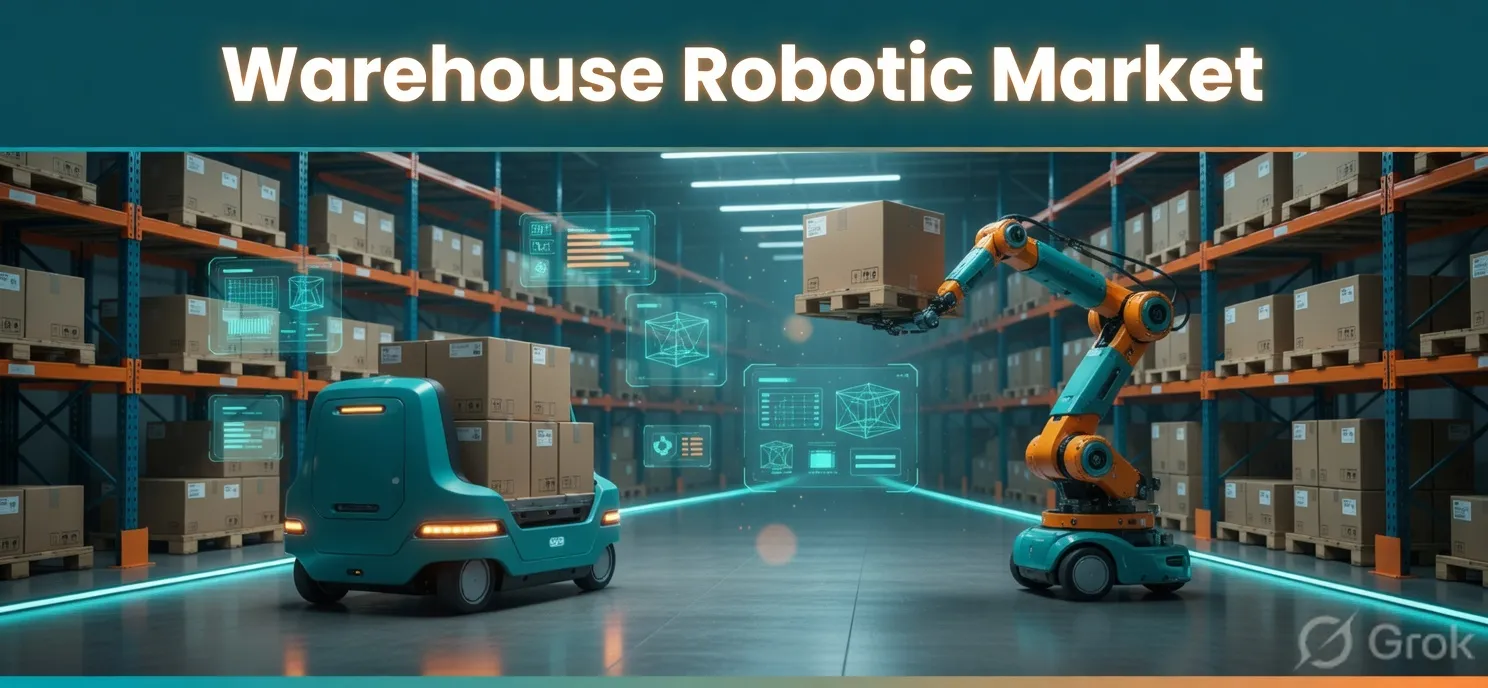
Warehouse Robotic Market
Key Takeaways
-
Warehouse Robotic Market is projected to reach USD 62.7 billion by 2032 at a 23.8% CAGR.
-
Autonomous Mobile Robots (AMRs) with AI-powered navigation are the dominant structural growth driver.
-
Goods-to-person (GTP) and autonomous forklift solutions are gaining traction in e-commerce and third-party logistics (3PL) segments.
-
Amazon Robotics (Kiva), Symbotic, GreyOrange, Locus Robotics, Fetch Robotics (Zebra), Geek+, and HAI Robotics lead competitive supply.
-
Asia-Pacific dominates manufacturing and deployment; North America and Europe accelerate through labor shortage mitigation.
The Warehouse Robotic Market is projected to grow from USD 10.9 billion in 2024 to USD 62.7 billion by 2032 (23.8% CAGR), driven by the mass-market adoption of autonomous mobile robots across e-commerce and omnichannel fulfillment centers, the expansion of AI-powered picking and packing solutions into mid-market warehouses, and the proliferation of goods-to-person systems that reduce labor costs and improve throughput by 2-3x.
Market Size and Forecast (2024-2032)
| Metric | 2024 Value | 2032 Projected Value / CAGR |
|---|---|---|
| Warehouse Robotic Market | USD 10.9B | USD 62.7B | 23.8% CAGR |
Segment & Technology Breakdown
| Technology | Segment | Primary Buyer | Key Driver |
|---|---|---|---|
| Autonomous Mobile Robots (AMR) | E-commerce, 3PL | Fulfillment Centers | Labor reduction, flexible routing |
| Goods-to-Person (GTP) | Retail, Omnichannel | Retailers, Distributors | Picking efficiency, reduced travel |
| Automated Forklifts | Heavy Payload, Manufacturing | Industrial Warehouses | Pallet movement, vertical storage |
| Robotic Picking Arms | Mixed-Case, Returns | High-Volume DCs | SKU diversity, labor-intensive tasks |
What Is Driving the Warehouse Robotic Market Demand?
-
AMR Adoption Surge: The migration from fixed automation and manual carts to SLAM-based AMRs is accelerating as robots achieve 99%+ navigation reliability in dynamic environments, directly reducing walk time by 60-80% and increasing picking productivity by 2-3x compared to manual operations.
-
Goods-to-Person Standardization: GTP systems are gaining traction among mid-market operators seeking to compete with Amazon-scale fulfillment, commanding system payback periods of 12-24 months through 50-70% reduction in labor costs and 99.5%+ inventory accuracy.
-
Labor Shortage Mitigation: Persistent warehouse labor shortages across North America and Europe are creating structural demand for robotic automation, with operators reporting 30-50% reduction in temporary labor dependency and 15-25% improvement in retention of existing staff working alongside robots.
-
E-commerce Peak Seasoning: The proliferation of same-day and next-day delivery expectations is driving warehouse robotic investment for peak capacity scaling, with robotic fleets enabling 3-5x throughput scaling during holiday periods without permanent headcount increases.
KEY INSIGHT
Enterprise 3PL operators deploying AMR fleets report a 120% improvement in units picked per labor hour and a 35% reduction in new hire training time (from 2 weeks to 4 days), with validated ROI payback periods of 9-18 months across North American and European distribution centers.
Get the full data — free sample available:
→ Download Free Sample PDF: Warehouse Robotic Market
Includes market sizing, segmentation methodology, and regional forecast tables.
Regional Market Breakdown
| Region | Maturity | Key Drivers | Outlook |
|---|---|---|---|
| North America | Mature | Labor shortages, e-commerce penetration | Steady; AMR and GTP leading |
| Europe | Strong | Automation incentives, high labor costs | Strong; collaborative robotics accelerating |
| Asia-Pacific | Dominant | Manufacturing scale, rapid e-commerce growth | Highest volume; China & Japan lead |
| Middle East & Africa | Expanding | Logistics hub development | Growing; 3PL segment leading |
| Latin America | Emerging | E-commerce infrastructure buildout | Moderate; entry-level AMR growth |
Competitive Landscape
| Category | Key Players |
|---|---|
| AMR Specialists | Locus Robotics, Fetch Robotics (Zebra), 6 River Systems (Shopify) |
| Goods-to-Person (GTP) | Geek+, GreyOrange, HAI Robotics, AutoStore |
| Heavy Payload / Forklifts | Symbotic, Vecna Robotics, Balyo |
| Integrated Solutions | Amazon Robotics (Kiva), Dematic (KION), Honeywell Intelligrated |
Outlook Through 2032
AMR commoditization, GTP standardization, and AI-powered fleet orchestration will define the warehouse robotic market through 2032. Vendors investing in mixed-fleet interoperability, robotic picking dexterity, and software-as-a-service (SaaS) operational intelligence will capture the highest-margin 3PL and enterprise contracts as warehouse robotics transition from competitive differentiator to baseline fulfillment infrastructure.
Access complete forecasts, segment analysis & competitive intelligence:
→ Purchase the Full Warehouse Robotic Market Report (2025-2032)
*7-year forecasts | Segment & application analysis | Regional data | Competitive landscape | 200+ pages*
Keywords: Warehouse Robotics | Autonomous Mobile Robot | AMR | Goods-to-Person | GTP | Automated Forklift | Fulfillment Automation | E-commerce Logistics
© 2025 WiseGuy Reports (WGR) · All Rights Reserved · wiseguyreports.com
All market projections are forward-looking estimates sourced from WGR’s proprietary research reports and subject to revision.